A new assessment by the Economic Community of West African States (ECOWAS) has identified Nigeria, alongside a few member countries, as having the highest number of internally displaced persons (IDPs) across the sub-region a crisis driven by insurgency, banditry, communal conflicts, environmental disasters and deteriorating humanitarian conditions.
The report, released during the ECOWAS Commission’s regional humanitarian coordination meeting, shows that millions of West Africans are currently living away from their homes, with Nigeria topping the chart due to prolonged insecurity in the North-East, North-West and parts of the North-Central.
Officials said the displacement crisis in West Africa has reached a “historic scale,” stressing the need for stronger regional coordination, improved funding and proactive conflict-prevention strategies.
According to the report, Nigeria’s displacement figures continue to rise due to:
- Persistent Boko Haram/ISWAP attacks in Borno, Yobe and Adamawa;
- Worsening banditry and ransom kidnappings across the North-West;
- Farmer-herder conflicts and communal clashes in Plateau, Benue and Nasarawa;
- Floods and climate-related disasters displacing thousands annually.
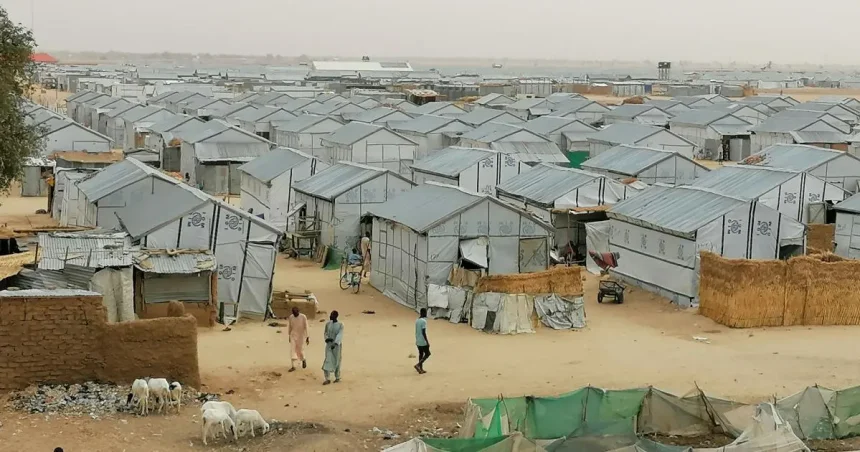
Humanitarian agencies estimate that over 3 million Nigerians remain displaced internally, while tens of thousands seek refuge in neighboring countries such as Niger, Chad and Cameroon.
ECOWAS noted that despite recent security interventions, the scale and severity of displacement remain alarming, calling for deeper interagency collaboration between defense, humanitarian and development institutions.
Apart from Nigeria, ECOWAS highlighted Burkina Faso, Mali, Niger Republic and Guinea-Bissau as major hotspots where displacement is rapidly escalating.
In Burkina Faso, armed groups have forced more than 2 million citizens to flee their communities, making it one of the fastest-growing displacement crises in the world.
Mali and Niger continue to struggle with militant violence, while political instability in parts of the region including recent coups has worsened population movements and cross-border pressures.
Humanitarian officials warn that the impact of displacement is most severe on:
- children who lack access to schooling,
- pregnant women without healthcare,
- and elderly persons trapped in host communities with limited resources.
In Nigeria alone, aid agencies say nearly 1 million displaced children are at risk of severe malnutrition and protection threats, including forced marriage, child labor and trafficking.
To address the growing crisis, ECOWAS announced a series of regional actions including:
- deployment of rapid-response humanitarian teams;
- increased funding for emergency food assistance;
- plans for a regional early-warning and disaster-prevention framework;
- and renewed engagement with member states on security-sector reforms.
The bloc also urged international partners to scale up support for IDP camps, cross-border humanitarian corridors, and livelihood projects to help displaced families rebuild their lives.
Security analysts say the success of these interventions will depend on Nigeria and other affected states strengthening local governance, increasing funding for humanitarian programs and intensifying peace and stabilization efforts.
The ECOWAS report underscores a deepening humanitarian emergency in West Africa, with Nigeria at the epicenter of displacement pressures. As insecurity, climate disasters and political instability persist, regional and global collaboration will be crucial to reversing the trend and restoring stability for millions of vulnerable people across the region.