
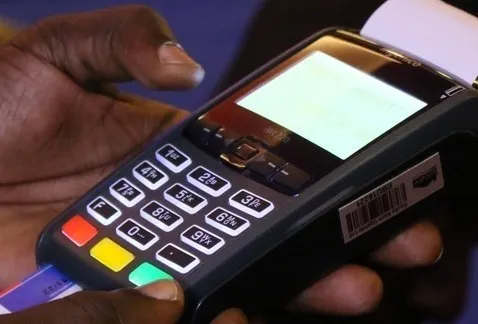
The Federal Government has officially abolished all cash payments in Ministries, Departments and Agencies (MDAs) and ordered the immediate deployment of Point of Sale (PoS) terminals and digital payment systems across government offices to eliminate revenue leakages and strengthen public finance transparency.
The policy, approved under the ongoing financial-reform agenda, mandates that every form of government payment fees, licenses, fines, approvals, processing charges and service payments must now be conducted electronically, either through PoS, bank transfers, or approved treasury platforms.
The directive takes effect immediately and applies to all federal institutions, including revenue-generating agencies, regulatory bodies, security formations, and special service units.
Officials said the new system is designed to shut down decades-old loopholes in manual cash collection, curb fraud, and ensure every naira collected enters the Treasury Single Account (TSA) without diversion.
Senior government insiders say the decision follows months of internal audits showing:
- widespread under-remittance of government revenue,
- non-transparent fee collection practices by some MDAs,
- difficulty in tracking real-time payments,
- and leakages linked to cash-based transactions.
The government believes that deploying PoS terminals will ensure instant payment validation, reduce face-to-face manipulation, eliminate unofficial charges and strengthen financial reporting across the public sector.
This aligns with the administration’s broader shift towards cashless governance, digital service delivery, and an automated budget system reforms that also include the Federal Treasury e-Receipt, the GIFMIS upgrade, and mandatory digital procurement.
To enforce the change, MDAs are required to submit evidence of PoS deployment and digital readiness to the Office of the Accountant-General and the Ministry of Finance.
Under the policy:
- Citizens and businesses will pay government fees only through digital channels — PoS, transfers, or verified online platforms.
- MDAs must ensure PoS terminals are connected directly to the TSA-linked accounts, not individual staff accounts or unverified collections wallets.
- All receipts will be generated electronically for real-time tracking.
- Payment data will automatically sync with government audit and monitoring dashboards.
This digital shift directly supports public financial transparency, cashless revenue collection, anti-corruption strategies, and MDAs’ compliance with the Federal Government’s digital reforms all strong SEO keywords now crucial to Nigeria’s governance reporting.
Several MDAs have already begun compliance.
Some agencies particularly those with heavy human traffic such as immigration, customs, regulatory commissions and examination bodies have expressed readiness to switch fully to PoS-driven payments.
Public policy analysts commend the move, saying cashlessness will significantly reduce leakages that have historically deprived the government of billions in internally generated revenue.
However, stakeholders warn that the reforms must be backed by:
- strong supervision to prevent the emergence of unofficial PoS channels,
- strict penalties for agencies that refuse to comply,
- reliable internet infrastructure in rural or high-output MDAs,
- and real-time reconciliation to prevent mismatched records.
The abolishment of cash transactions positions Nigeria to move fully into a modern, accountable, technology-driven public finance system.
The Federal Government says this marks the beginning of a wider transformation that will soon include:
- a completely paperless workflow environment,
- fully digital revenue dashboards,
- performance-based budgeting,
- and automated procurement processes.
As enforcement begins across hundreds of government offices, the success of the reform will depend on compliance, monitoring, and the government’s ability to sustain a real-time digital payment ecosystem.