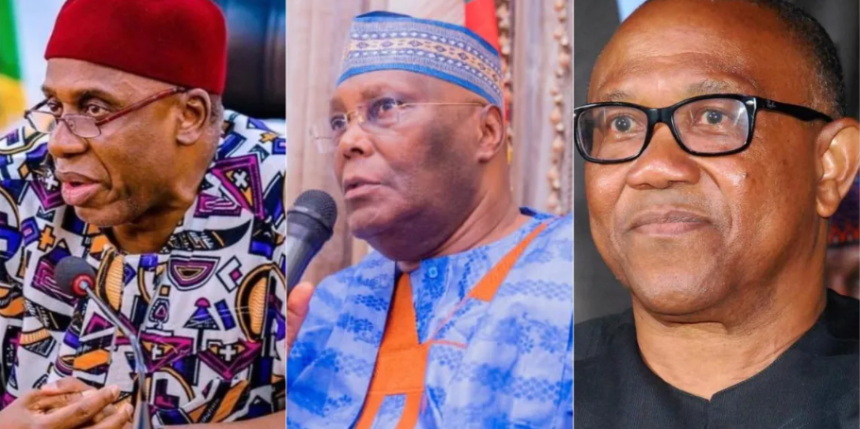
The emerging opposition coalition built around former Vice President Atiku Abubakar is intensifying its search for a formidable southern running mate ahead of the 2027 presidential race. According to insiders, Peter Obi and Rotimi Amaechi have become the two most prominent figures in discussions, each offering a different pathway for broadening national appeal.
Strong advocacy for an Atiku–Obi ticket has come from political strategist and ally Dele Momodu, who argues that such a partnership could form the most potent challenge to the incumbent administration. He believes the combination has the ability to consolidate northern and southern votes while re-energizing disenchanted blocs across party lines.
Yet the picture is far from simple. Should negotiations with Obi stall or fail, Rotimi Amaechi has been floated as another influential option. Momodu has praised Amaechi’s notable mobilisation strength and his deep political network, particularly in the South-South region, where the opposition hopes to make significant gains.
Obi’s Camp Pushes Back
The idea of Obi serving as a running mate has been met with firm resistance from many within the Obidient Movement. They have dismissed the speculation as unfounded, stressing that Obi’s political involvement is mission-driven rather than ambition-driven.
Obi himself has reiterated that no formal discussion has taken place regarding positions or power-sharing within the coalition. For him, any alliance must be grounded in a shared commitment to tackling poverty, economic decline, and governance failures not the distribution of titles.
Leadership within the African Democratic Congress (ADC), where many of these coalition talks are unfolding, claims the party remains united irrespective of who emerges as its presidential or vice-presidential candidate. Decisions on zoning or open primaries are still pending, keeping the field open for all the major players.
Amaechi Stands Firm on Presidential Ambition
Adding another layer of complexity, Rotimi Amaechi has openly rejected any consideration of a vice-presidential slot. His media team has declared that he remains committed to contesting for the presidency outright, signalling that he will not step aside or accept a secondary role under any alliance arrangement.
This stance disrupts earlier assumptions that Amaechi could serve as a fallback option should talks with Obi prove unproductive. Political analysts say Amaechi’s refusal shows the fragility of the coalition, where multiple power centres are pushing parallel ambitions.
What It All Means for 2027
The Atiku-led bloc is seeking a delicate balance between regional representation and political pragmatism. Securing a strong southern figure is seen as essential for creating a competitive ticket capable of challenging the ruling party.
However, with both Obi’s camp expressing skepticism and Amaechi insisting on his own presidential bid, the coalition faces a strategic crossroads. The opposition’s ability to navigate personal ambitions, party loyalties, and ideological differences will determine whether it emerges as a united force or splinters before the 2027 elections.
For now, the political landscape remains fluid, the alliances uncertain, and the race wide open with each major figure weighing the benefits of unity against the allure of leading the charge alone.