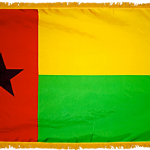
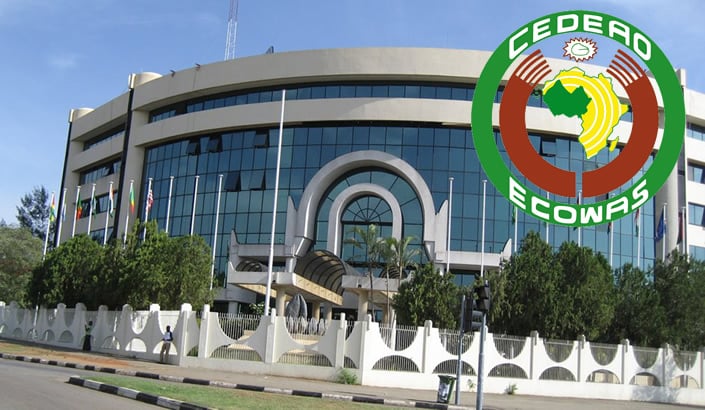
The Economic Community of West African States (ECOWAS) has officially suspended Guinea-Bissau from all its governing bodies following the recent military coup that upended the country’s electoral process and plunged the nation into political uncertainty. The regional bloc is now demanding the immediate restoration of constitutional order and the release of detained political leaders.
The suspension was announced after an emergency meeting of the ECOWAS Mediation and Security Council, where member states unanimously condemned the military takeover as a violation of democratic principles and a direct breach of the ECOWAS Protocol on Democracy and Good Governance.
On 26 November 2025, military officers in Guinea-Bissau seized control of key state institutions, halted the ongoing presidential vote-counting process, and detained top government officials and electoral staff. The coup occurred amid disputes over provisional election results, with both leading candidates claiming victory.
The military dissolved the national electoral authority, suspended the constitution, and later installed General Horta N’Tam as the head of a transitional government actions that drew swift regional and international criticism.
ECOWAS Issues Strong Demands
In its resolution, ECOWAS outlined several conditions for the military junta, including:
- Restoration of constitutional order without delay
- Release of all detained government and electoral officials
- Reinstatement of civil authority and reopening of state institutions
- Protection of human rights and free movement of citizens
- A firm deadline for transitioning power back to an elected civilian administration
The bloc emphasized that Guinea-Bissau will remain suspended until these steps are fully implemented.
The coup represents the latest in a troubling wave of military takeovers across West Africa, raising renewed concerns about democracy, peace, and regional stability. Analysts warn that repeated unconstitutional changes of government risk emboldening insurgent groups, destabilizing economies, and weakening regional cooperation.
In its statement, ECOWAS stressed that coups are not acceptable under any circumstances and urged the junta to engage in dialogue with regional mediators.
Several West African governments have aligned with the suspension, describing the coup as a clear threat to democratic governance. Nigeria’s foreign ministry condemned the actions of the military officers, calling for the immediate release of detainees and restoration of the electoral process.
The African Union (AU) and United Nations have also voiced concern, supporting ECOWAS’ decision and warning that prolonged military rule could trigger economic sanctions.
The capital, Bissau, remains heavily militarized, with roadblocks, soldier patrols, and curfews restricting movement. Residents reported fear and uncertainty, with many uncertain about the country’s political future.
Markets and public offices have partially reopened, but tension persists, especially as opposition supporters demand full publication of election results, while coup supporters insist the military intervention was necessary to “prevent electoral chaos.”
ECOWAS has dispatched a high-level delegation of heads of state and senior diplomats to Guinea-Bissau. Their mandate is to negotiate directly with the military leadership and push for an immediate timetable for civilian transition.
The bloc has not ruled out additional sanctions—including economic and travel restrictions—if the junta refuses to cooperate.
The suspension carries significant implications for Guinea-Bissau:
- Loss of regional voting rights
- Loss of access to ECOWAS development programs
- Risk of financial and economic isolation
- Increased diplomatic pressure
- Heightened scrutiny from global partners
But for the people of Guinea-Bissau, the biggest concern remains stability. Businesses, transport systems, and community activities have slowed as residents brace for potential economic hardship.
As West Africa confronts yet another coup, ECOWAS’ latest action signals a renewed push to defend democratic norms in the region. Yet the success of this intervention depends heavily on the cooperation of Guinea-Bissau’s military leaders and the unity of international partners.
For now, Guinea-Bissau sits in a fragile balance suspended, isolated, and under intense pressure to restore the constitutional order it abruptly abandoned.