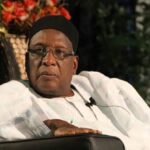
The Federal High Court in Abuja has adjourned indefinitely the trial of former Anambra State Governor, Willie Obiano, over alleged ₦4 billion money laundering. The decision came following a request by the Economic and Financial Crimes Commission (EFCC).
At Tuesday’s session before Justice Mohammed Umar, the EFCC’s prosecuting counsel, S.O. Obila, said he had instructions to seek a sine die adjournment. He noted that nine witnesses had already testified under the previous judge, Justice Inyang Ekwo, and the agency was unable to bring them all back.
Obiano’s defense team, led by Onyechi Ikpeazu, SAN, did not oppose the application. Ikpeazu reportedly acknowledged the prosecution’s challenge in securing the return of key witnesses. The court granted the request and officially adjourned the trial indefinitely.
- Obiano was arraigned by the EFCC on 24 January 2024 on nine counts including money laundering.
- The anti-graft agency alleges he misappropriated over ₦4 billion from Anambra State’s security vote account, funnelling the money into private companies and converting some into foreign currency.
- During earlier proceedings, a Bureau de Change operator, Ayuba Tanko, testified that he received ₦416 million in tranches from Obiano’s administration via proxy accounts.
The case has already experienced disruptions. Justice Inyang Ekwo, who initially handled the trial, was suspended by the National Judicial Council, leading to a reassignment of the case to Justice Umar. In July 2025, the court had set 25 November 2025 for the resumption of the trial.
Legal and anti-corruption observers caution that indefinite adjournment could undermine public confidence in the justice process, especially given the high-profile nature of the case. Some fear the delay may weaken the prosecution’s position or lead to further procedural complications.
On the other side, Obiano’s legal team argues that a fair trial cannot proceed without the full roster of prosecution witnesses, and the court’s decision reflects the practical challenges of coordinating testimony after a judge change.