The National Council on Privatisation (NCP) has approved the Bureau of Public Enterprises’ (BPE) request to finalise the execution of performance agreements with Transcorp Power Consortium for the sale of Afam Power Plc and Afam III Fast Power Limited.
The decision, taken at the Council’s third meeting held on Thursday at the Presidential Villa, Abuja, aims to regularise post-acquisition conditions and ensure the commercial viability of the power assets.
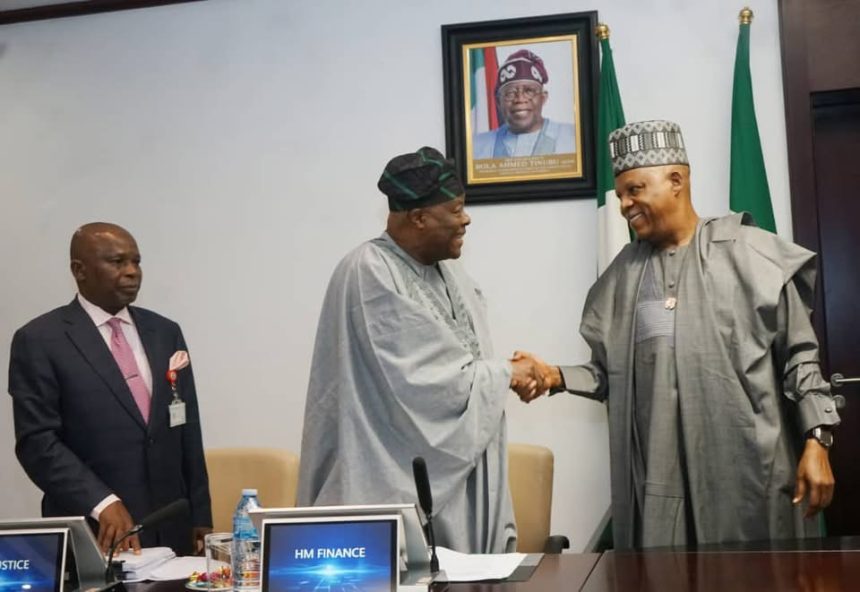
Chairman of the Council and Vice President, Kashim Shettima, who presided over the meeting, called for a fundamental shift in Nigeria’s privatisation strategy — from the sale of state-owned enterprises to the optimisation of national assets — as part of efforts to drive the nation’s trillion-dollar economy ambition.
Read Also: NCPWD Honours Dr. Samuel Ankeli at 61, Hails His Role in Advancing Disability Rights
According to the Director General of BPE, Ayodeji Ariyo Gbeleyi, the Federal Government has completed the sale process of the Afam Power assets, with N53.9 billion realised as privatisation proceeds.
Gbeleyi explained that while Transcorp Power Consortium had taken over the assets since 2020, the execution of the Performance Agreements (PAs) is essential to formalise the investor’s commitments and performance targets.
“With the execution of the PAs to regularise the transactions, the BPE can now commence post-privatisation monitoring of the core investor’s obligations,” he said.
The DG also briefed the Council on key 2025 milestones, including the unbundling of the Transmission Company of Nigeria (TCN) into two entities — the Nigerian Independent System Operator (NISO) and the Transmission Service Provider (TSP).
In his remarks, Vice President Shettima said the NCP must now serve as the “economic compass” guiding Nigeria’s investments, policies, and reforms toward sustainable growth.
“Our aspiration to build a trillion-dollar economy demands discipline, vision, and adherence to the compass produced by this Council,” he stated. “Without such a compass, our economic projections would remain theoretical.”
He emphasised that the country’s latent assets — including underutilised land, dormant real estate, and intellectual property — must be leveraged through innovative models such as long-term concessions, asset-backed securitisation, and core investor partnerships tied to strict performance benchmarks.
The Vice President also warned against transaction ambiguities that could trigger costly litigation, urging zero tolerance for irregularities to build investor confidence.
“We must send a powerful signal of stability and seriousness to the international investment community,” he added.
Minister of Finance and Coordinating Minister of the Economy, Wale Edun, commended the BPE for its reforms and stressed the need for sustained adherence to global best practices.
Other key officials present included the Minister of Power, Chief Adebayo Adelabu; Minister of Budget and Economic Planning, Senator Atiku Bagudu; Attorney General of the Federation and Minister of Justice, Lateef Fagbemi (SAN); and the Governor of the Central Bank of Nigeria (CBN), Olayemi Cardoso.