The clash between Federal Capital Territory (FCT) Minister Nyesom Wike and a military officer in Abuja has evolved far beyond a governance issue. What began as a tense encounter over a disputed plot of land in the Gaduwa District quickly turned into a viral online phenomenon, a digital stage for clout-chasing, hero-making, and opportunistic content creation.
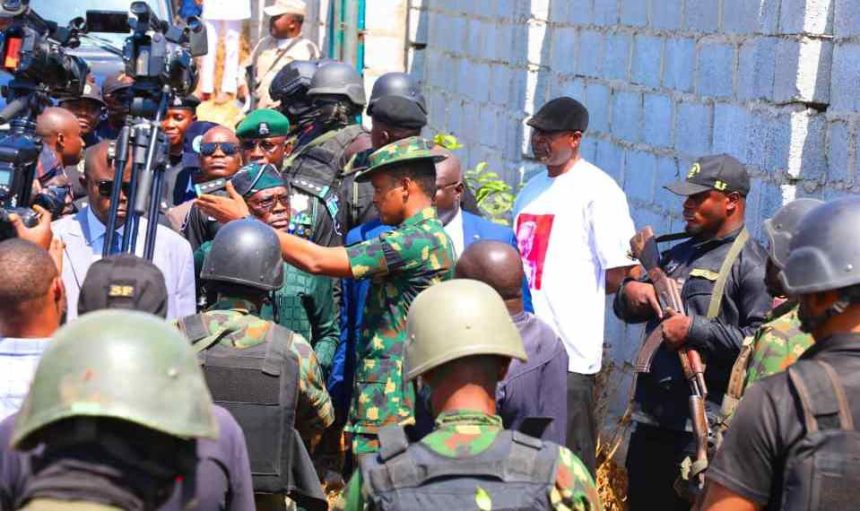
The confrontation erupted publicly on 11 November 2025, when Wike led officials of the FCTA to reclaim a contested property reportedly linked to former Chief of Naval Staff Awwal Zubairu Gambo (rtd.). In the now-viral video, Wike accuses the soldiers guarding the site of intimidation and interference in a lawful operation. One of the officers, identified in some reports as Lt Yerima, insists he is acting under orders and refuses to “shut up.” Wike retorts sharply, calling him “a big fool.”
The exchange heated, dramatic, and caught on camera, spread across Nigerian social media within hours, sparking outrage, amusement, and countless reinterpretations. Actress Yvonne Jegede quickly weighed in, hailing the soldier as “the face of a new Nigeria” and saying his composure restored her faith in the system. In contrast, APC chieftain Joe Igbokwe demanded the officer’s dismissal, while activist Deji Adeyanju publicly clashed with him online over what true accountability should look like.
Soon, the content-creation machinery went into full swing. On TikTok and X (formerly Twitter), influencers reshared the clip, added commentary, and generated memes. User @ameboplug joked, “This video sweet my belle… the guy needs to be promoted, they suppose double his rank.” Comedy creators such as Amar and Anam, Cute Abiola, and IamNasboi parodied the exchange in skits, capitalising on the viral momentum. Meanwhile, the soldier’s sister, posting under the handle @OumarMrs, joined the trend, writing that she was “so proud” of her brother and would wash his clothes for a month, a personal touch that amplified sympathy for him.
As the story circulated, Nigerians began inserting themselves into the narrative. Dozens of photoshopped images appeared online, placing fans, particularly women, beside the soldier in mock “couple” pictures. Some went further, using AI tools to fabricate scenes of an imaginary physical altercation, turning what was merely a verbal exchange into a cinematic fantasy.
Although no verified crowdfunding campaigns have been confirmed, imitation pages and donation links have surfaced echoing a now-familiar pattern where emotional online moments become monetised through “support” funds, engagement bait, and influencer partnerships. For many, the goal is less about justice and more about clicks, views, and personal brand growth.
What started as a straightforward enforcement mission has thus become digital theatre. The visual contrast of a powerful minister and a defiant uniformed officer, the quotable insults (“big fool,” “I will not shut up”), and the ease of remixing the footage made it irresistible content. Influencers, entertainers, and activists have each shaped the episode into a story that fits their audiences, part political drama, part comedy, part moral lesson.
The Wike–soldier clash reveals how governance issues in Nigeria now migrate seamlessly into social media entertainment. A serious question about land rights, civil-military relations, and institutional authority has been reframed as a contest for virality. In this digital re-telling, truth competes with humour, and public accountability is often measured not by facts, but by who trends first.