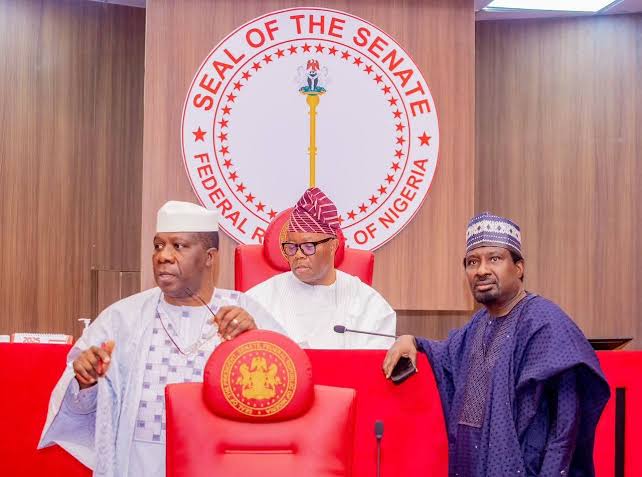
The Nigerian Senate Committee investigating oil theft in the Niger Delta has uncovered discrepancies amounting to over $200 million in missing oil funds, raising serious concerns about transparency and accountability in the country’s petroleum revenue management.
In its report presented to the Senate on Tuesday, the committee revealed significant gaps and weak oversight in the tracking and remittance of oil proceeds, citing inconsistencies between financial records from key institutions.
A detailed forensic review showed unexplained differences of $22 million in oil sales and a shortfall of $81 million between figures reported by the Nigerian National Petroleum Company Limited (NNPCL) and those recorded by the Central Bank of Nigeria (CBN) for the years 2016 and 2017.
Read Also: Senate to Debate Trump’s Claims on Alleged Christian Genocide in Nigeria
The committee noted that when combined with other discrepancies and undocumented transactions, the total unaccounted funds could exceed $200 million.
According to the report, the losses stemmed from poor monitoring mechanisms, weak inter-agency coordination, and ineffective regulatory oversight.
The committee also faulted the lack of real-time data integration among key agencies such as the NNPCL, CBN, the Nigerian Upstream Petroleum Regulatory Commission (NUPRC), and the Office of the Accountant-General of the Federation.
The report further called for a comprehensive audit of oil revenue flows from production to export, as well as reforms to strengthen transparency and digital tracking of crude exports.
It recommended punitive measures against officials and companies found complicit in the discrepancies, stressing that the recurring issue of oil theft and unaccounted revenues continues to undermine Nigeria’s fiscal stability.
Lawmakers are expected to debate the report in plenary later this week, with possible resolutions for a full-scale investigation and new legislative measures to plug revenue leakages in the oil and gas sector.