Nigeria’s Minister of Power, Adebayo Adelabu, has disclosed that the country currently has over 10,000 megawatts (MW) of electricity generation capacity lying idle due to a combination of gas shortages, poor transmission infrastructure, and policy bottlenecks.
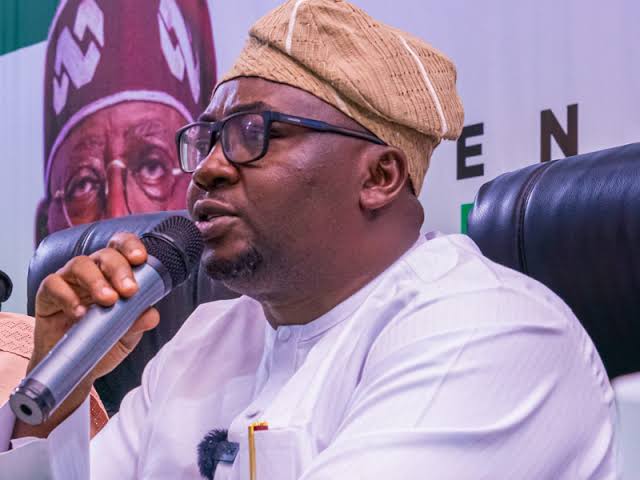
Speaking during a media briefing on Friday in Abuja, Adelabu lamented that the country’s persistent power shortages are not due to a lack of capacity, but rather the inability to efficiently utilize available generation assets across the country.
“We have over 10,000 megawatts of installed generation capacity that is currently underutilized. The challenge is not generation alone, but transmission and distribution inefficiencies that prevent Nigerians from benefiting from what we already have,” the minister said.
According to Adelabu, several power plants including both government-owned and Independent Power Producers (IPPs) are either operating far below capacity or have completely shut down operations due to inadequate gas supply and lack of maintenance funding.
He explained that while Nigeria’s installed generation capacity stands at about 13,000MW, actual generation fluctuates between 3,500MW and 4,500MW.
“It’s unacceptable that with the amount of investment in the power sector, we are still generating less than 5,000MW for over 200 million people,” he noted. “We’re taking aggressive steps to resolve the constraints, especially around gas contracts and transmission expansion.”
Industry analysts say one of the major obstacles to unlocking the idle capacity is the shortage of natural gas to power plants.
Many generation companies (GenCos) have repeatedly complained about the non-payment of gas debts, which has forced suppliers to cut back delivery.
Adelabu confirmed that the government is working closely with the Ministry of Petroleum Resources and the Nigerian Midstream and Downstream Petroleum Regulatory Authority (NMDPRA) to create a Gas-to-Power framework that ensures stable supply.
“We are implementing a plan that will guarantee gas availability for all operating power plants and support the rehabilitation of non-functional ones,” he said.
The minister also pointed to the weak transmission network as another critical challenge, noting that the national grid cannot evacuate more than 5,500MW at any given time.
This means that even when generation peaks, the system cannot deliver power to consumers efficiently.
To address this, Adelabu said the government has commenced grid reinforcement projects and is partnering with international agencies, including the World Bank and African Development Bank, to expand transmission lines and sub-stations.
“We are working towards a transmission capacity that can handle at least 10,000MW in the short term. The future of Nigeria’s energy sector depends on coordinated investment across the value chain,” he added.
Energy experts have welcomed the minister’s transparency but warned that policy inconsistency and debt accumulation could continue to stifle the sector.
An energy consultant, said the government must prioritize commercial viability and market reforms to attract investment.
“Unlocking 10,000MW requires more than gas. It requires governance reforms, tariff adjustments, and investor confidence,” Oladipo said.
Reliable power supply has long been a cornerstone of Nigeria’s industrial ambitions. With thousands of megawatts idling, analysts estimate that the economy loses billions of naira daily in productivity.
Small and medium-scale enterprises (SMEs) continue to rely heavily on diesel generators, raising production costs and undermining competitiveness.
Adelabu reaffirmed that the administration is committed to achieving 24-hour electricity in major urban centers within the next few years, emphasizing collaboration with the private sector to unlock dormant capacity.
“We are focused on turning Nigeria’s power challenge into an opportunity. Every idle megawatt will be recovered and put to use,” he vowed.
The revelation underscores the paradox of Nigeria’s power sector a nation rich in resources but constrained by inefficiencies.
As reforms intensify, stakeholders will be watching to see whether the government can truly deliver on its promise to power Africa’s largest economy.