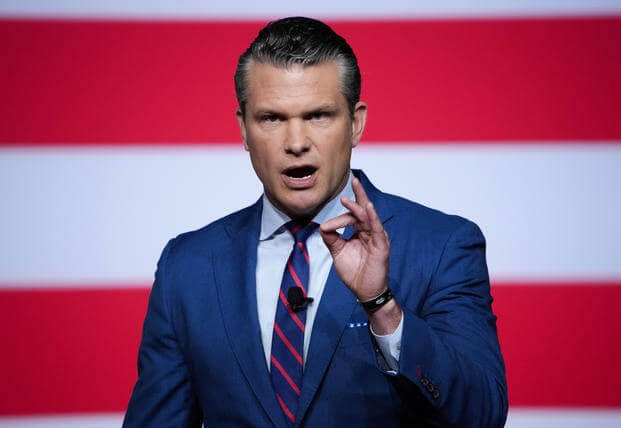
In a dramatic escalation of rhetoric between Washington and Abuja, U.S. Secretary of Defense Pete Hegseth has declared that “the Department of War is preparing for action” if Nigeria fails to protect Christians from extremist violence. His remarks came in alignment with an earlier threat by former President Donald Trump, who had threatened to enter Nigeria “guns-a-blazing” to eradicate what he called “Islamic terrorists” targeting Christians.
The controversy began when Donald Trump, via social media, accused Nigeria of allowing Christian communities to be slaughtered, declaring that the United States might intervene militarily and suspend aid. Hegseth doubled down on the threat in a post on X (formerly Twitter), insisting:
“Either the Nigerian Government protects Christians, or we will kill the Islamic terrorists who are committing these horrible atrocities.”
This marks one of the most overt public threats of U.S. force in Nigeria in recent years.
Nigeria’s response was swift and firm. The government condemned the rhetoric as unacceptable interference, reaffirming that it remains committed to protecting all citizens, regardless of faith. Foreign affairs officials emphasized that sovereignty must be respected and called for diplomatic dialogue over threats.
Regional bodies, including the African Union and ECOWAS, are expected to raise concerns about unilateral military interventions in member states, especially without UN approval or multilateral consensus.
The U.N. Charter permits military action across borders only in narrow cases: self-defense or with Security Council authorization. Many legal experts argue that the public nature of the threat by a U.S. official, if acted upon, would run afoul of international law and established norms of state sovereignty.
Security analysts also warn that such action could backfire risking civilian casualties, triggering retaliation, and worsening instability in regions already traumatized by insurgency. In Nigeria, extremist groups have long targeted both Christians and Muslims; injecting foreign military action could blur attribution and deepen sectarian divides.
Violence in Nigeria has multiple roots Boko Haram and ISWAP in the northeast, banditry in the northwest, and sectarian militias elsewhere. These conflicts have produced victims across religious communities, making the narrative of exclusively religious targeting tenuous.
Experts believe that Nigeria’s best path to stability lies in strengthening intelligence, security coordination, governance reforms, and inclusive development rather than external military intervention.
What’s Next?
- Diplomatic engagement: Expect urgent talks between Nigeria and the U.S., possibly mediated by international partners.
- Multilateral pressure: The UN, African Union, and other states may demand verifiable evidence and restraint.
- U.S. internal review: Congressional and institutional checks may examine whether such threats align with U.S. war powers.
- Public scrutiny: Independent human-rights groups will likely press for data on Christian killings and hold both governments accountable.
The idea that war might be used as a tool to protect religious groups verges on a dangerous precedent. If Hegseth’s threat remains rhetoric, it may be dismissed in retrospect but if it becomes policy, the consequences could reshape U.S.–Africa relations, sovereign immunity norms, and the daily lives of Nigerians caught in conflict zones.
As tensions simmer, the important questions remain: Who holds the truth? Who acts in genuine protection, and who performs political posturing? Nigeria, the region, and the world will be watching closely.