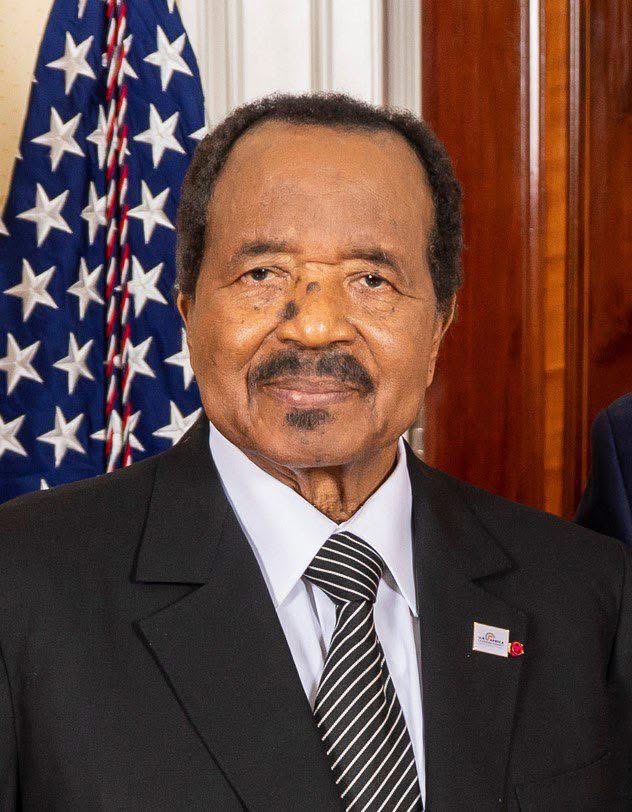
Cameroon’s President Paul Biya, aged 92, has been declared winner of the country’s presidential election, securing a controversial eighth term in office that could see him remain in power until 2032, when he will be 99 years old.
The country’s Constitutional Council announced the results on Monday, confirming that Biya, candidate of the ruling Cameroon People’s Democratic Movement (CPDM), won 53.66 percent of the total votes cast in the October 12 poll.
His closest rival, opposition leader Issa Tchiroma Bakary of the National Front for Justice (NFJ), garnered 35.12 percent, while smaller opposition candidates shared the remainder.
The victory extends Biya’s nearly five-decade rule, making him one of the world’s longest-serving heads of state and the oldest currently in office.
The opposition has rejected the outcome, alleging widespread electoral fraud, ballot stuffing, and intimidation of voters in opposition strongholds.
Read Also: Nigeria To Face Gabon in 2026 World Cup Play-Offs
In the economic capital, Douala, and several northern towns, spontaneous protests erupted following the announcement, leading to clashes between demonstrators and security forces.
Local media and civil society groups reported at least four fatalities and several injuries during the unrest. Security personnel have been deployed to major cities, with checkpoints and heavy patrols in Yaoundé, Bafoussam, and Maroua. “We cannot accept this daylight robbery,” said Bakary, calling for international mediation and the annulment of what he termed “a stolen mandate.”
In a televised address late Monday, President Biya thanked Cameroonians for their renewed confidence and promised to continue his “mission of peace, unity, and progress.” He urged citizens to remain calm, pledging that his administration would “work with all patriotic forces to preserve national stability.”
Government spokesperson Rene Emmanuel Sadi dismissed claims of irregularities, describing the election as “transparent, credible, and reflective of the people’s will.”
International observers, including delegations from the African Union (AU) and Economic Community of Central African States (ECCAS), acknowledged logistical challenges and limited access to some polling areas due to insecurity in the Anglophone regions but stopped short of declaring the poll fraudulent.
The European Union expressed concern about “the lack of a level playing field,” urging dialogue between the government and opposition. The United States called for restraint, transparency, and respect for democratic principles.
Paul Biya has ruled Cameroon since 1982, following the resignation of the country’s first president, Ahmadou Ahidjo. His long tenure has been marked by a mix of political dominance, constitutional reforms, and intermittent unrest.
In 2008, Biya removed presidential term limits, paving the way for indefinite re-election. Critics accuse his government of stifling dissent, restricting press freedom, and failing to address economic inequality and the long-running conflict in the Anglophone regions, where separatists continue to fight for independence.
Despite the controversies, Biya maintains strong backing among sections of the elite and older citizens who credit him with maintaining stability in the oil-rich Central African nation.
If he completes his new seven-year term, Biya will have ruled Cameroon for half a century, a record unmatched in modern African politics outside of monarchies. Analysts say his re-election underscores the enduring strength of incumbency in African politics and the weakness of opposition coalitions.
“This is not just a victory for Biya; it’s a reflection of how power structures have remained entrenched in Cameroon,” said political analyst Dr. Sylvie Moukala. “The challenge now is whether the country can manage political transition when the time inevitably comes.”