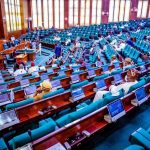
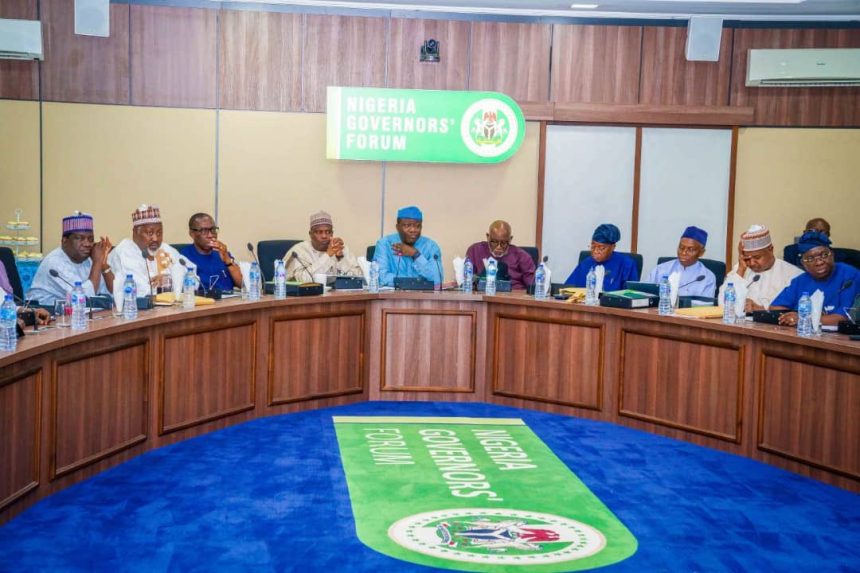
In a landmark push toward gender inclusion and balanced representation, several state governors have publicly endorsed a new bill seeking to reserve legislative seats for women in Nigeria’s National and State Assemblies. The proposed legislation, now under consideration by the National Assembly, aims to address the long-standing gender gap in political leadership and decision-making across the country.
The bill, titled “A Bill for an Act to Provide Reserved Seats for Women in the Legislature”, proposes the allocation of specific seats for women at both national and state levels. Advocates say this measure will help ensure women have a consistent voice in governance, especially in a political climate historically dominated by men.
Governor Seyi Makinde of Oyo State, one of the first to publicly declare his support, described the proposal as “a progressive and necessary step toward inclusive democracy.” According to him, “Women have proven across sectors that they are capable leaders, and it’s only fair that our political structures reflect their strength and contributions.”
Similarly, Kaduna State Governor Uba Sani called on lawmakers to pass the bill swiftly, emphasizing that “representation should not be a privilege but a right. When women are excluded, the nation loses balance in policymaking.”
The renewed push follows the National Gender Policy’s call for 35 percent affirmative action in appointive and elective positions a target Nigeria has failed to meet since the 1995 Beijing Declaration. Currently, women make up less than 5 percent of lawmakers in both chambers of the National Assembly, one of the lowest figures in Africa.
Civil society organizations and advocacy groups, including the Nigerian Women Trust Fund (NWTF), Women in Politics Forum (WIPF), and the United Nations Women, have applauded the growing political support. Dr. Mufuliat Fijabi, CEO of NWTF, noted that “if passed, this bill will correct decades of systemic exclusion and inspire millions of girls to see politics as a place they belong.”
According to data from the National Bureau of Statistics (NBS), women account for over 49 percent of Nigeria’s population but occupy less than 10 percent of elective offices. Analysts argue that this imbalance not only undermines equality but also weakens governance by limiting diversity of thought and perspective.
While supporters are optimistic, critics have raised questions about the practicality of reserved seats, warning that it could lead to tokenism rather than genuine empowerment. Senator Ibrahim Danladi (APC, Katsina) argued that “legislative seats should be earned through competence and contest, not quotas,” suggesting that the focus should instead be on removing the socio-economic barriers that limit women’s participation.
Proponents counter this by emphasizing that affirmative action is a corrective measure, not a permanent fix. “It’s about leveling the playing field,” explained Hon. Nkechi Ogbara, a member of the House of Representatives. “Men have benefited from systemic privilege for decades. This bill simply ensures that women finally get the institutional support they deserve.”
The proposed framework allocates 37 reserved seats for women in the House of Representatives and 3 in the Senate, distributed across geopolitical zones. Each state assembly would also have a designated number of reserved seats to ensure uniform implementation.
International observers, including the African Union (AU) and the Inter-Parliamentary Union (IPU), have lauded the initiative, noting that several African nations such as Rwanda, Tanzania, and Senegal have successfully implemented similar measures. Rwanda currently leads the world with 61 percent female parliamentary representation.
Political analysts say the growing chorus of support from governors could be the catalyst needed for the bill’s passage. Dr. Hussaini Abubakar, a political scientist at Ahmadu Bello University, remarked that “governors’ backing carries political weight. Their endorsement signals a shift in elite consensus toward inclusivity.”
On social media, the conversation has been vibrant. Women’s rights advocates have launched hashtags like #ReservedSeatsNow and #BalanceTheTable, calling on lawmakers to act swiftly. Many see this as an opportunity for Nigeria to align its governance with global standards on gender equity.
As the National Assembly prepares for the bill’s second reading, the momentum appears to be building. However, the outcome will depend on whether lawmakers can rise above partisan interests to prioritize national unity and progress.
“Women don’t need sympathy; they need systems that work,” said Hon. Amina Bello, one of the bill’s sponsors. “This is not a favor it’s justice long overdue.”
If passed, the Reserved Seats Bill could mark a turning point in Nigeria’s democratic evolution one that moves from rhetoric to reality in achieving gender-balanced governance.