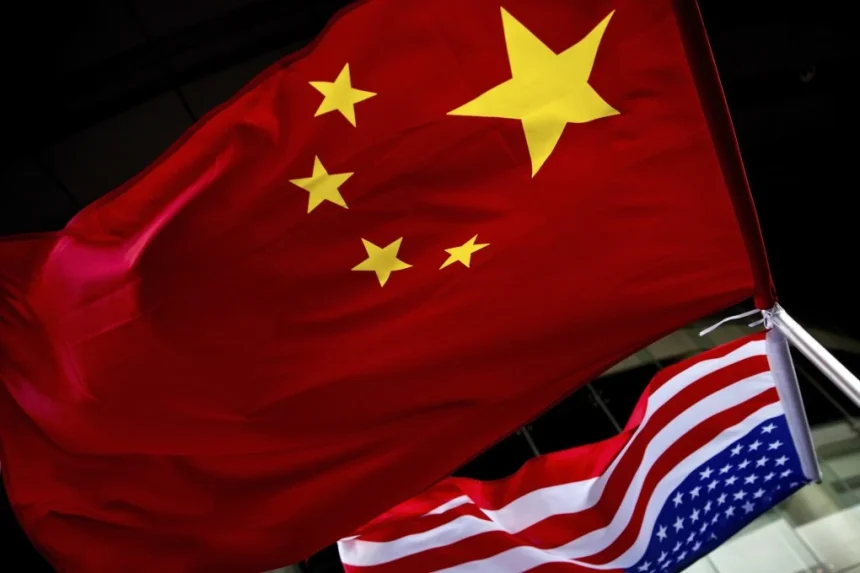
The United States and China have agreed to resume high-level trade talks in a renewed effort to stabilize economic relations between the world’s two largest economies, both sides confirmed on Thursday.
The agreement follows months of diplomatic engagements and rising concerns over tariffs, technology restrictions, and global supply chain disruptions that have strained ties between Washington and Beijing.
According to a joint statement released by the U.S. Department of Commerce and China’s Ministry of Commerce, the two nations will hold “constructive discussions” aimed at addressing outstanding trade and investment issues while preventing further economic escalation.
“The United States and China have agreed to intensify dialogue and cooperation on trade and economic matters,” the statement read. “Both parties recognize the importance of maintaining stable trade relations for global growth and market confidence.”
Tensions between the two economic superpowers have been simmering since the U.S.-China trade war began in 2018 under then-President Donald Trump, leading to hundreds of billions of dollars in tariffs on both sides. While the Phase One Deal signed in 2020 temporarily eased hostilities, many of the core disputes including intellectual property rights, subsidies, and market access remain unresolved.
In recent months, new friction has emerged over U.S. export restrictions on advanced semiconductor technology and Chinese investment in strategic industries. The trade imbalance, estimated at over $280 billion in 2024, has further fueled tensions.
Observers say the decision to resume trade talks comes at a crucial time, as both countries face economic headwinds at home. China is battling a sluggish recovery following its property market downturn, while the United States is navigating inflationary pressures and slowing GDP growth.
A senior U.S. official told Reuters that the renewed discussions “signal a pragmatic shift” by both sides. “Neither Washington nor Beijing benefits from prolonged economic confrontation. The talks are about finding common ground while protecting national interests,” the official said.
China’s Commerce Minister, Wang Wentao, echoed similar sentiments, stressing that dialogue remains the best path forward. “Cooperation between China and the U.S. is not a choice but a necessity,” he said during a press briefing in Beijing. “A stable and mutually beneficial relationship is essential to global economic recovery.”
News of the planned talks lifted investor sentiment worldwide. Asian and European markets recorded modest gains, while Wall Street futures climbed slightly amid optimism that renewed dialogue could ease uncertainty in global trade.
Economists say a breakthrough even a limited one could restore some confidence in global markets, particularly in sectors such as technology, energy, and manufacturing, which have been heavily impacted by U.S.-China tensions.
However, analysts also caution that deep divisions remain, especially over issues such as data security, Taiwan, and human rights. “This is a positive diplomatic step, but not a resolution,” said Dr. Laura Cheng, an international trade analyst at the London School of Economics. “Both governments will need to manage domestic expectations while negotiating complex economic reforms.”
The first round of talks is expected to take place in Washington, D.C., before the end of the year, with working groups focusing on tariff adjustments, investment guarantees, and technology exchange frameworks.
Both governments emphasized that the renewed dialogue does not mean an end to competition but rather a commitment to manage differences responsibly.
As the global economy continues to grapple with inflation, supply chain disruptions, and geopolitical uncertainty, the world will be watching closely to see if Washington and Beijing can turn cautious diplomacy into meaningful economic progress.