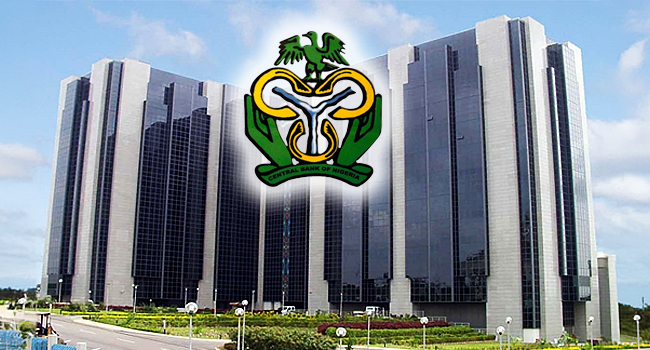
High bank charges and multiple taxes have been identified as the biggest obstacles facing Nigerian businesses in September 2025, according to the Central Bank of Nigeria’s (CBN) latest Business Expectations Survey (BES).
The report, which measures the opinions of business owners across sectors including manufacturing, services, construction, and agriculture, revealed that both high bank charges and multiple taxation scored 70.8 points each on the constraint index making them the top challenges for businesses during the period. Poor infrastructure followed closely at 70.7 points.
The CBN noted that these issues continue to weigh heavily on operating costs, profitability, and investor confidence, despite recent monetary and fiscal interventions aimed at stabilizing the business environment.
Nigeria’s Inflation Falls to 18.02%, Lowest in 3 Years After Six-Month Decline
The September BES indicates that small and medium enterprises (SMEs) and large corporations alike are struggling to cope with rising transaction fees imposed by banks and a web of overlapping taxes collected by federal, state, and local authorities.
The survey found that businesses are increasingly frustrated by what they describe as “unending deductions” and “complex tax obligations.” According to the report, “High bank charges and multiple taxes have emerged as significant drags on business performance and profitability, with many respondents citing the need for urgent regulatory intervention.”
The CBN’s analysis further showed that poor infrastructure particularly unreliable electricity, bad roads, and poor logistics remains a critical concern, contributing to higher production costs and reduced efficiency.
Other major constraints identified in the survey include unfavourable economic policies (64.9 points), exchange rate volatility (62.3 points), and limited access to credit (58.5 points).
Many business owners across Nigeria say they are struggling to stay afloat due to these overlapping burdens.
A Lagos-based retail entrepreneur, , said the situation has become unbearable.
“Every month, my bank takes money for things I don’t even understand. Between transfer fees, maintenance charges, and transaction costs, it feels like I’m working for the bank,” she said.
In Kano, small manufacturer and described multiple taxation as a major threat to business survival.
“You pay local government levies, environmental taxes, inspection fees, and even charges from agencies that have nothing to do with your business. Sometimes it’s the same thing under different names,” he said.
Tech entrepreneur from Abuja added that even digital startups aren’t spared.
“People think tech companies have it easy, but we pay transaction charges on every online payment. Add to that VAT and local business levies, and you’re left with very little profit,” she said.
According to the CBN, 70.8 percent of surveyed businesses listed bank charges and multiple taxation as their most significant challenges, a trend that has persisted since early 2024.
Poor infrastructure and regulatory uncertainty were the next major constraints, with over 68 percent of respondents citing them as barriers to expansion.
Interestingly, while inflation and exchange rate instability remain concerns, business confidence showed a modest rebound. The Business Confidence Index rose slightly to 31.5 points in September, up from 29.7 points in August, suggesting cautious optimism about future economic stability.
Economic analysts say the findings underscore the urgent need for regulatory and fiscal reforms.
Economist and policy analyst, said Nigeria’s private sector cannot thrive under excessive fiscal pressure.
“The combination of multiple taxes and high bank fees is suffocating productivity. It discourages investment and pushes many small businesses back into informality,” he said.
A financial exper, added that bank charges have gone beyond reasonable limits.
“Businesses are paying for everything SMS alerts, transfers, ATM usage, and even dormant accounts. The CBN should revisit its policy on charges and ensure that banks operate transparently,” he said.
Nigeria’s economy depends heavily on private enterprise particularly SMEs, which make up over 90 percent of registered businesses and contribute more than 48 percent to GDP. When high financial and tax costs eat into margins, productivity, and job creation, economic growth slows.
Multiple taxation not only increases costs but also creates confusion and opportunities for corruption. Experts have long called for a unified tax collection framework that harmonizes federal, state, and local levies to prevent duplication.
Meanwhile, high bank charges have been linked to reduced financial inclusion, as small firms and low-income earners avoid formal banking systems to escape fees.
To ease the pressure on businesses, economists recommend the following:
1. Tax Harmonization: The Federal Inland Revenue Service (FIRS) should work with state and local governments to eliminate redundant taxes and create a unified tax database.
2. Bank Charge Regulation: The CBN should review its banking fee structure and enforce caps to prevent excessive deductions.
3. Infrastructure Investment: Governments at all levels must prioritize electricity, road, and logistics improvements to cut business overheads.
4. SME Relief Packages: Introduce tax holidays or charge exemptions for small businesses struggling with high costs.
5. Policy Consistency: Maintain predictable fiscal and monetary policies to rebuild investor confidence.
The CBN’s September Business Expectations Survey highlights what many entrepreneurs already know: the cost of doing business in Nigeria remains painfully high.
As taxes multiply and banks tighten their grip with rising fees, small and medium enterprise the backbone of the economy continue to fight for survival.
Until the burden of high charges, complex taxes, and poor infrastructure is addressed, Nigeria’s promise of private-sector-led growth will remain out of reach.