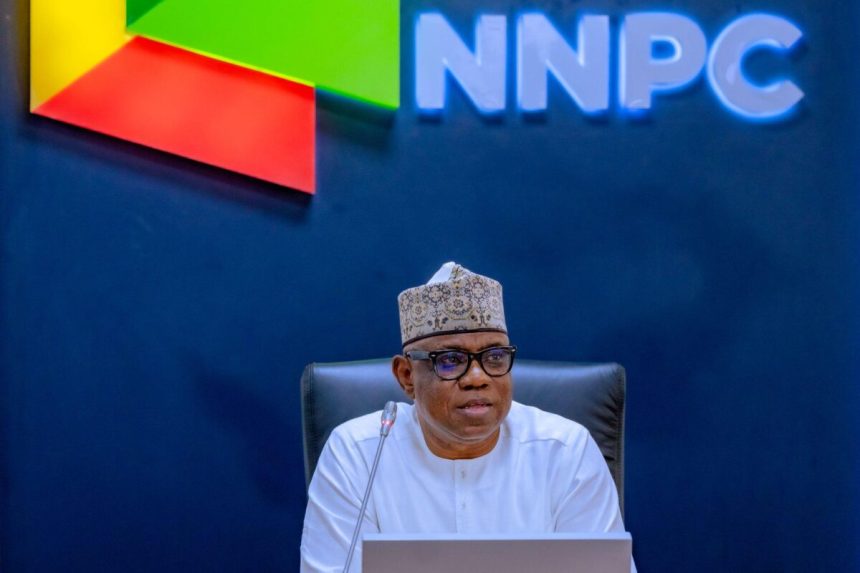
Nigerian National Petroleum Company Limited (NNPCL), under the leadership of Group Chief Executive Officer Bashir Bayo Ojulari, has set an ambitious target of 1.9 million barrels per day (bpd) crude oil production by the end of 2025. The announcement was made during the inauguration of the new NNPCL board at the State House, where Ojulari addressed President Bola Ahmed Tinubu.
Ojulari told the President that production had recently risen to 1.7 million bpd, up from 1.5 million bpd just two months earlier. He expressed confidence that continuing improvements would bring output to 1.9 million bpd by year-end.
He also noted that this growth has been driven by turnaround maintenance on existing infrastructure and more aggressive stakeholder engagements. “Production had risen to 1.7 million barrels in two months from 1.5 million barrels, with the target of reaching 1.9 million barrels by year-end,” Ojulari said.
Aside from boosting production, NNPCL is working to reduce operational costs. Ojulari revealed a roadmap aimed at saving between US$3 billion and US$4.5 billion by December 2025 through cost optimisation across upstream operations. That includes reducing technical losses, improving pipeline security, and more efficient maintenance scheduling.
Ojulari attributed the production uptick and cost savings drive to the ongoing economic reforms and policy shifts under President Tinubu. These reforms, he said, have sent the right signals to attract foreign direct investment (FDI) into the petroleum sector.
By way of background, he noted that these reforms include improved regulatory clarity and more robust oversight of oil infrastructure. These are considered essential to sustaining production growth.
Operational Challenges Remain
While the target is bold, analysts warn that there are several headwinds:
Infrastructure issues: Old pipelines, periodic shutdowns for maintenance, and vandalism remain serious threats to achieving nominal output.
Funding and investment: Although more capital is flowing into the sector, meeting the 1.9 million bpd target will require sustained investment, timely cash flows, and favourable terms for both domestic and international oil companies.
Security risks: Theft of crude, attacks on pipelines, and insecurity in oil-producing regions can derail output unexpectedly.
Refinery limitations: Even if crude production increases, Nigeria’s refining capacity still lags behind demand, meaning higher crude output must be matched with downstream capabilities to fully reap economic benefits.
What This Means for Nigerians
If achieved, the 1.9 million bpd target could have several positive outcomes:
Lower risk of fuel shortages and potential stabilization of petroleum product supply.
Greater foreign exchange savings, as Nigeria reduces dependency on imported refined crude.
Increased revenues for the government, provided oil prices are favorable.
Stimulus to local content, jobs, and supporting industries (logistics, services, security, etc.).
On the other hand, missing the target could raise questions about NNPCL’s operational capacity, challenge investor confidence, and come under criticism from opposition and civil society concerning transparency.
Bashir Ojulari and the NNPC management plan to maintain bi-weekly meetings with industry stakeholders to monitor progress, address bottlenecks, and adjust operational strategies as needed.
Additionally, there are plans to review existing refineries and pipeline infrastructure to ensure maintenance delivers sustained uptime. Some older refineries may also be reviewed for possible sale or restructuring as part of the broader performance improvement agenda.