
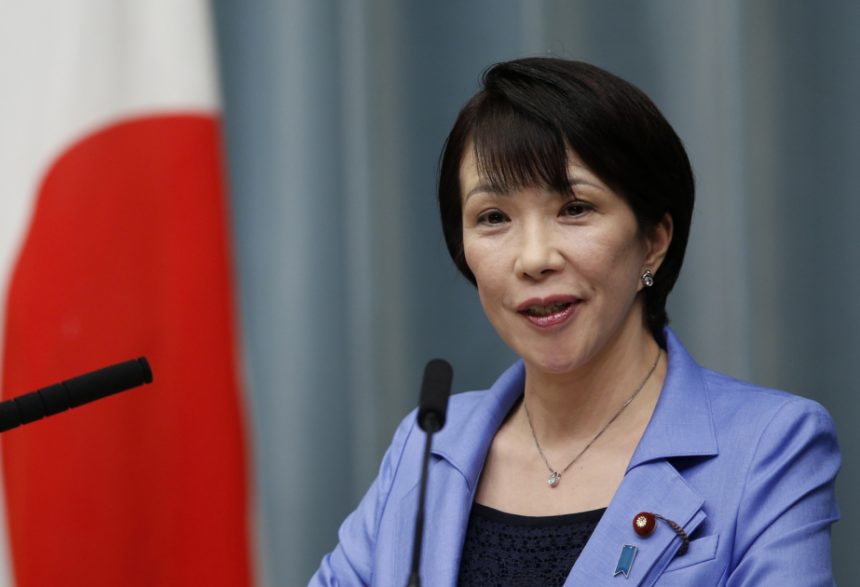
Sanae Takaichi, a veteran conservative politician, has been elected leader of Japan’s ruling Liberal Democratic Party (LDP), putting her on track to become the country’s first-ever female prime minister. She defeated Agriculture Minister Shinjiro Koizumi in a runoff vote on October 4, 2025, securing 185 votes to his 156, a narrow margin but one that clinches her the leadership.
Her victory marks a significant moment in Japanese politics, which has long been dominated by male leaders. At age 64, Takaichi will be the first woman to hold both the LDP presidency and the premiership if confirmed by parliament in mid-October.
Takaichi ran as part of a five-member field in the LDP presidential race. None of the contenders gained a majority in the first round, sending the contest into a runoff.
On the first round, she earned 183 votes, while Koizumi got 164. In the final round, those numbers adjusted slightly, with Takaichi pulling ahead.
The incumbent prime minister, Shigeru Ishiba, stepped down after LDP losses in recent elections, opening the way for this leadership contest.
First Female PM (Expectant): With the LDP still the largest party, her election as party leader makes her the front-runner to be officially elected prime minister by Diet members. A vote is expected around October 15, 2025.
Party Direction: Takaichi is known for her right-wing views. She has expressed admiration for former Prime Minister Shinzo Abe and has been associated with conservative stances on national security, immigration, and constitutional reform. Her leadership may steer the LDP (and Japan) more firmly toward traditional conservative policies.
Challenges Ahead: The ruling party no longer holds a majority in both chambers of parliament. That means even though she has the leadership position, passing legislation, managing budgets, and dealing with public expectations will be more difficult. There’s also public unease about economic pressures, inflation, and Japan’s aging population.
While Takaichi’s emergence is being celebrated as a breakthrough for gender representation, observers caution that symbolism alone won’t suffice. Japan ranks low on many global gender equality indices, especially regarding women in political leadership.
Takaichi herself has had mixed signals on feminist-oriented reforms: she has opposed some proposals, like allowing women to retain separate surnames within marriage or pushing for broader gender-equality legislation. Critics suggest her gender first may be symbolic unless followed by concrete policy shifts.
In her victory speech, Takaichi acknowledged the tough road ahead. She called for unity within the LDP, recovery of public trust, and renewed energy to address voters’ concerns.
She has also proposed greater fiscal investment into crisis-management sectors like economic security, technology, defense, and innovation. Her platform signals strong emphasis on preserving sovereignty, strengthening national defense, and managing economic challenges.
Implications for Japan and Beyond
Domestic Policy: Japan may see shifts toward more conservative positions on immigration, security, and constitutional issues.
Foreign Relations: Takaichi’s nationalist posture may complicate relationships with China, South Korea, and others, though she has expressed the need for stable diplomacy.
Gender Dynamics: Her rise may inspire further conversations about women in leadership and structural change, but also face tests of expectations and policy follow-through.
Sanae Takaichi’s election as leader of the LDP is undeniably historic: she is expected to become Japan’s first female prime minister in what many hope will be more than just a symbolic moment. But her real test begins now holding the reins of power in a fractured parliament, delivering on economic and social concerns, and navigating both public expectations and deep conservative currents within her own party.
Takaichi’s path forward is as much about shaping policies as it is about transforming perceptions. If she succeeds, her leadership may be remembered as a turning point in Japanese politics. If she stumbles, critics will point to the constraints of tradition, faction, and low public approval. Either way, the eyes of the nation and the world are closely watching.