By Aisha Muhammad Magaji
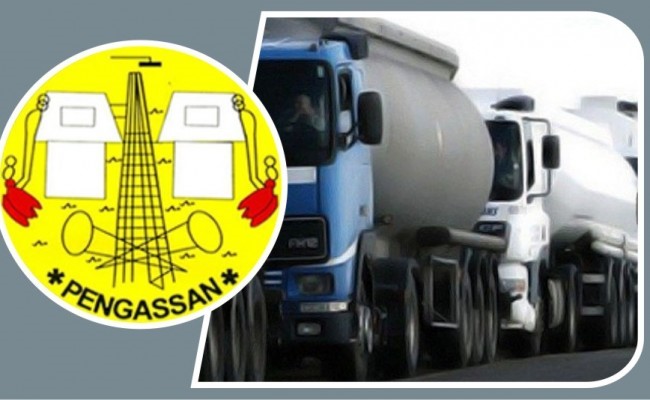
The Petroleum and Natural Gas Senior Staff Association of Nigeria (PENGASSAN) has suspended the supply of gas and crude oil to the Dangote Petroleum Refinery in Lagos, in protest over the dismissal of some of its members.
Confirming the action in a statement on Friday, the union said the move became necessary after what it described as the “unjust termination of employment” of refinery workers who are members of PENGASSAN.
According to the union, efforts to resolve the matter amicably with management were unsuccessful, leaving them with no choice but to withdraw cooperation.
“Our members cannot continue to work in an environment where job security is threatened,” PENGASSAN stated. “The sack of our members was carried out without following due process. Until justice is done, supply of crude and gas to the refinery will remain suspended.”
The action is expected to disrupt refinery operations at a time when the country is looking up to the $20 billion Dangote Refinery to cushion Nigeria’s fuel supply challenges.
Located in the Lekki Free Trade Zone, the refinery, with a capacity of 650,000 barrels per day, is regarded as Africa’s biggest single-train facility. It began test runs late last year and has since played a role in easing the demand for imported refined petroleum products.
Industry analysts warn that any prolonged suspension of crude and gas supply could have ripple effects on fuel availability and pricing across the country.
“This is a sensitive moment. With petrol and diesel prices already high, even minor disruptions in refinery output could affect supply chains nationwide,” said Dr. Ebere Ogbu, an energy economist.
Reports indicate that the affected workers were laid off earlier this week over what the management described as “structural adjustments.” However, PENGASSAN insists that the dismissals violated existing labor agreements.
The union also accused the refinery management of attempting to “stifle union activities” and undermine workers’ rights.
A senior official of PENGASSAN, who spoke on condition of anonymity, said:
“We will not accept intimidation. Workers at Dangote Refinery must be treated fairly, with dignity and respect. Anything less will be resisted.”
As of press time, the Dangote Group has yet to issue an official statement on the matter. However, sources close to the refinery management suggested that negotiations with the union were ongoing to resolve the standoff quickly.
The source hinted that management considered the sack a routine exercise to streamline operations and claimed that affected workers were compensated.
“Management is engaging with stakeholders to find a middle ground. The refinery is a national asset, and we cannot allow prolonged disruptions,” the source said.
The Federal Ministry of Labour and Employment has waded into the matter, urging both sides to show restraint.
A statement from the ministry noted:
“Industrial harmony is crucial, particularly at this time when the Dangote Refinery is critical to national energy security. We are working with both the union and refinery management to resolve the dispute through dialogue.”
The refinery has been in the spotlight since operations commenced, with Nigerians viewing it as a key project to end years of dependence on imported refined products. News of the disruption has sparked concern among consumers, who fear the standoff could worsen fuel scarcity.
“We have been waiting for this refinery to reduce petrol prices. Now the supply stoppage is another problem,” said Ibrahim Musa, a commercial driver in Abuja. “Government must step in before things get worse.”
PENGASSAN has vowed to sustain its action until all affected workers are reinstated and management commits to upholding labor agreements.
Meanwhile, stakeholders have called for urgent intervention to prevent the industrial dispute from spiraling into a national energy crisis.
“The refinery’s stability is vital to Nigeria’s economic outlook,” said Dr. Ogbu. “If this dispute drags on, it could affect everything from transport costs to inflation.”
As Nigerians await the outcome of negotiations, the spotlight remains firmly on both the union and the refinery management to find common ground and restore operations.