By Aisha Muhammad Magaji
A tragic incident occurred on Friday in Zamfara State when a section of an artisanal gold mine collapsed, trapping an unknown number of miners underground. The collapse, which happened in Maru Local Government Area, has thrown the community into panic and renewed concerns about unsafe mining practices across Nigeria’s mineral-rich North West region.
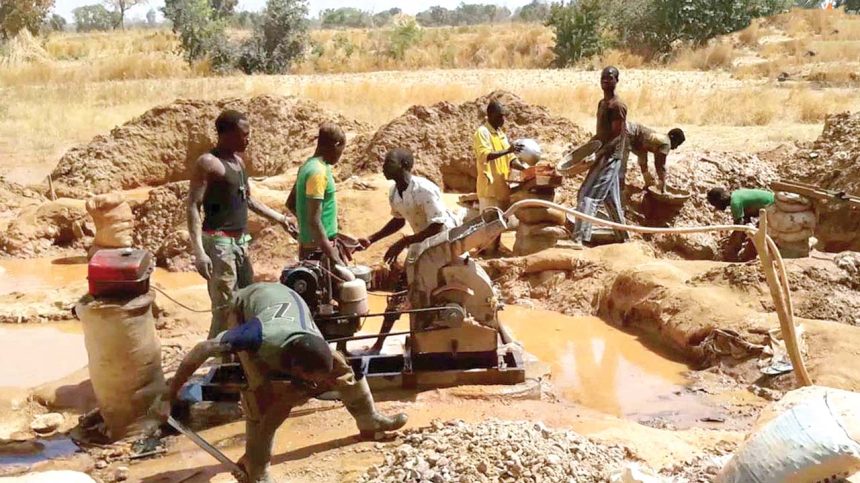
Eyewitnesses said dozens of local miners were inside the pit when it suddenly caved in following days of rainfall. While some managed to escape, many remain trapped beneath the rubble.
“It was like the ground swallowed them,” said Musa Ibrahim, a resident who joined early rescue efforts. “We heard people shouting for help, but the soil kept pouring in. Some of our brothers are still under there.”
Local emergency volunteers and fellow miners rushed to the scene, using crude equipment in a desperate attempt to dig through the debris. As of press time, the official casualty figure had not been confirmed.
The Zamfara State Government confirmed the collapse, saying emergency services had been dispatched to the site.
“We are working with security agencies, local authorities, and rescue teams to save as many lives as possible,” said Yusuf Idris, spokesperson for the state government. “This is a very sad development, and our thoughts are with the families affected.”
The National Emergency Management Agency (NEMA) also said its operatives had been deployed, though difficult terrain and limited access roads were slowing progress.
Mine collapses are not new in Zamfara and other mining hubs in Nigeria, where artisanal miners often dig deep shafts without proper safety measures. According to the Nigeria Extractive Industries Transparency Initiative (NEITI), over 80 percent of gold mining in Zamfara is informal and unregulated, making it highly prone to accidents.
In May 2023, a similar collapse in Niger State killed at least 25 miners, while dozens more have died in Zamfara over the past decade. Experts warn that unless small-scale mining is formalized and regulated, such tragedies will continue.
“Artisanal mining remains dangerous because of poor equipment, lack of training, and disregard for environmental risks,” said mining analyst, Dr. Aisha Sule of Ahmadu Bello University. “Government must find a way to integrate these miners into formal cooperatives where safety standards can be enforced.”
For residents of Maru, the disaster has once again exposed the human cost of the illegal mining trade that sustains thousands of families in the region.
“This is how we survive here,” said Abdullahi Mohammed, whose younger brother was among those trapped. “There are no jobs. People risk their lives every day in these pits, hoping to find gold. Now many families may not even see the bodies of their loved ones again.”
Many locals have accused authorities of neglect, saying that repeated warnings about the dangers of uncontrolled mining have been ignored.
“Whenever people die, they come and promise regulation, but nothing changes,” lamented 45-year-old trader, Halima Usman. “How many more must die before the government acts?”
Beyond the risks of collapse, illegal mining in Zamfara has long been linked to insecurity. Bandit groups are known to profit from the trade, taxing miners and controlling access to certain pits. The federal government has previously acknowledged that illegal mining finances armed groups in the region.
“This collapse is not just a safety issue. It shows the lack of regulation that also fuels insecurity,” said security expert, Kabiru Haruna. “The government cannot separate the humanitarian crisis from the security one.”
Civil society organizations have urged the government to seize the moment and implement urgent reforms.
“The lives lost today are a reminder that Nigeria must not continue business as usual in the mining sector,” said the Nigerian Mining and Geosciences Society (NMGS) in a statement. “We need to formalize artisanal mining, introduce safety training, and strictly enforce environmental guidelines.”
At the federal level, the Ministry of Solid Minerals Development has pledged to intensify monitoring of illegal mining operations. Minister Dele Alake recently announced plans to establish artisanal mining cooperatives to curb accidents and reduce insecurity.
By Friday evening, rescue teams were still battling to reach those trapped underground. Families gathered at the site, some clinging to hope, others resigned to the worst.
“We are praying for miracles,” said Fatima Aliyu, whose husband was in the pit when it collapsed. “Even if they cannot be rescued alive, we want to bury them properly.”
As Nigeria grapples with another mining disaster, the tragedy in Zamfara underscores the urgent need for safer practices, stronger regulation, and better economic alternatives for communities dependent on artisanal mining. Until then, mining in Zamfara remains both a lifeline and a deadly gamble.