
By Kabiru Abdulrauf
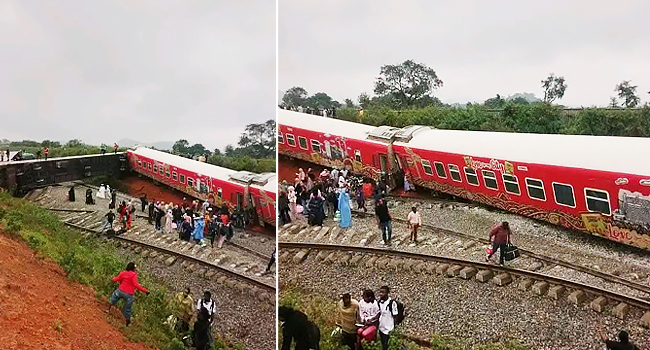
The Nigerian Safety Investigation Bureau (NSIB) has revealed that poor maintenance and a faulty track switch were the primary causes of the recent Abuja–Kaduna train derailment at Asham Station.
According to its preliminary report, several sleepers damaged during a previous incident were merely patched instead of being properly repaired. Investigators also discovered that the station’s automatic switch mechanism was unserviceable at the time, forcing railway workers to rely on a manually secured point clip that was later found broken—compromising the track’s alignment and triggering the derailment.
This marks the second derailment at the same station in just over a year, raising serious questions about infrastructure safety and maintenance culture. The NSIB also flagged gaps in training, noting that Nigerian Railway Corporation (NRC) personnel had not received formal refresher courses since their initial onboarding. Compounding the issue, essential operational tools and OEM spare parts were reportedly unavailable when needed.
While no fatalities were recorded among the 618 passengers on board, 21 people were injured in the August 26 incident. In its safety recommendations, NSIB called for urgent replacement of all compromised sleepers, installation of standard point switches across the Abuja–Kaduna corridor, restoration of defective monitoring equipment, and regular refresher training for NRC staff.
The bureau stressed that its findings are still preliminary and promised a full technical inspection of the track infrastructure, switch mechanisms, locomotives, and derailed coaches. Its final report, expected later this year, could shape a long-overdue overhaul of railway safety practices in Nigeria.