By Aisha Muhammad Magaji
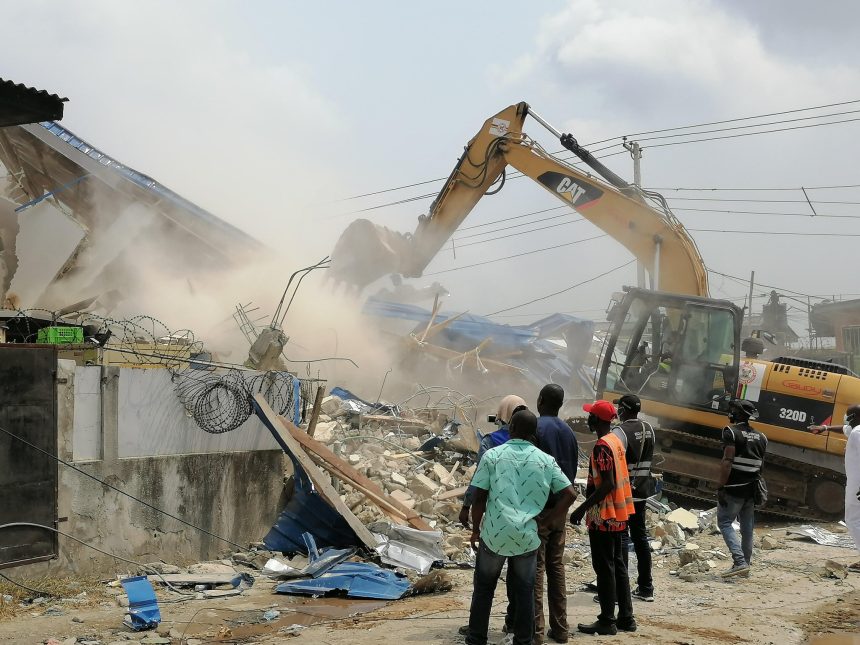
A wave of panic and outrage has gripped traders at the Lagos International Trade Fair Complex following reports of ongoing demolitions allegedly carried out by state officials without prior notice. Many traders described the move as “illegal and inhumane,” claiming that their shops and warehouses were torn down while businesses were still operational.
Eyewitnesses told S24 Media House that bulldozers arrived at the complex in the early hours of Tuesday under the supervision of men who identified themselves as government task force operatives. Within hours, several structures housing electronics, textiles, and household goods were flattened.
Traders said they were neither issued eviction notices nor given time to remove their stock. “This is sheer wickedness,” said Mrs. Ngozi Eze, a textile dealer. “We pay rent, taxes, and levies regularly. Suddenly, they bring bulldozers and destroy everything.”
Videos circulating on social media showed distraught shop owners scrambling to salvage goods while bulldozers pulled down walls. The footage has since sparked heated debates about governance, property rights, and due process in Lagos.
Disputed authority and legality
The Lagos State Government has not issued an official statement as of press time, but sources within the Ministry of Physical Planning insist that the structures demolished were “illegal extensions” and “encroachments” that violated the master plan of the Trade Fair Complex.
However, representatives of the traders’ association argued that the state has no legal authority over the facility. They insist the International Trade Fair Complex Management Board (ITFCMB), under the Federal Government, retains ownership and control of the complex.
“This is a federal property, not a state one,” said Chief Abiodun Olalekan, chairman of the Market Association. “What Lagos State is doing is unlawful interference. We will resist this attempt to take over what does not belong to them.”
Economic impact and livelihood concerns
The Trade Fair Complex, located along the Lagos-Badagry Expressway, is home to thousands of shops and warehouses, making it one of Nigeria’s busiest commercial hubs. The demolitions have raised fears of massive job losses, disruption of supply chains, and inflationary pressures in Lagos’s already fragile economy.
Mr. Ibrahim Musa, a dealer in auto spare parts, lamented: “I have goods worth over ₦30 million locked inside. They demolished my shop before I could move them. This is the end for my business.”
Observers warn that if the dispute between federal and state authorities is not resolved quickly, the demolition exercise could trigger widespread protests and paralyze commercial activity in Lagos.
Human rights groups have condemned the demolitions, calling them a violation of citizens’ rights to economic survival. The Centre for Public Accountability (CPA) described the action as “reckless, insensitive, and a deliberate attack on poor traders struggling to earn a living.”
They urged the Lagos State Government to halt further demolitions and engage stakeholders in dialogue to avoid escalation. “Due process must not be sacrificed on the altar of power play,” CPA said in a statement.
Market leaders say they are consulting legal experts to challenge the demolitions in court. They also plan to petition the Federal Government and the National Assembly to intervene, given the disputed ownership of the property.
Meanwhile, traders have vowed to remain at the complex until their grievances are addressed. “We will not leave this place. If they want to kill us, let them kill us here,” one protester shouted during a march within the complex.
The Lagos Trade Fair Complex controversy comes at a time when Nigeria is battling economic instability, high inflation, and widespread unemployment. Analysts fear that arbitrary demolitions, if not checked, could worsen poverty levels and fuel social unrest in urban centers.
For now, the fate of thousands of businesses at the Trade Fair Complex hangs in the balance, as traders, state officials, and federal authorities prepare for what could become a high-stakes legal and political battle over ownership and governance.