By Aisha Muhammad Magaji
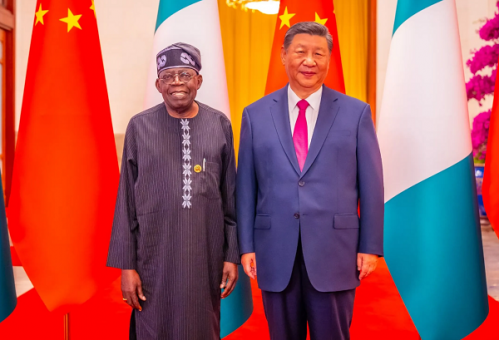
Nigeria and China have restated their shared commitment to strengthening bilateral relations, with both nations pledging to deepen cooperation in trade, infrastructure, technology, and cultural exchange.
The reaffirmation came during a high-level diplomatic engagement in Abuja on Tuesday, where senior government officials from both countries underscored the importance of sustaining a relationship that has spanned over five decades.
Nigeria’s Minister of Foreign Affairs, Ambassador Yusuf Tuggar, described China as one of Nigeria’s “most strategic partners” in its quest for accelerated economic growth. He highlighted ongoing collaborations in rail transportation, energy infrastructure, and telecommunications as practical examples of how the relationship has translated into visible benefits for Nigeria. He emphasized that Nigeria values its relationship with China “not only as a global economic power but also as a friend that has consistently shown commitment to our development aspirations,” adding that the government is determined to build on this foundation to ensure the partnership contributes to the prosperity of citizens.
China’s Ambassador to Nigeria, Cui Jianchun, reaffirmed Beijing’s willingness to continue supporting Nigeria’s development efforts. He said China is ready to share technology, expand investments, and boost trade flows between both nations. According to him, Nigeria remains a key partner in Africa under the framework of the Forum on China–Africa Cooperation (FOCAC) and the Belt and Road Initiative (BRI), with future cooperation focusing on renewable energy, the digital economy, agriculture, and skills development.
Strong Trade and Economic Ties
Nigeria and China enjoy robust trade relations, with China ranking as one of Nigeria’s largest trading partners. Recent data from the National Bureau of Statistics (NBS) shows that China accounted for over 25 percent of Nigeria’s total imports in the first half of 2025, ranging from machinery and electronics to construction materials.
On the other hand, Nigeria continues to export crude oil, liquefied natural gas (LNG), and agricultural products to the Asian giant. Officials from both sides stressed the need to diversify trade beyond oil, with emphasis on manufacturing and agro-processing.
Infrastructure and Technology
China’s footprints are visible across Nigeria’s infrastructure landscape, from the Abuja–Kaduna railway line to the ongoing construction of the Lagos–Ibadan standard gauge rail. Collaborative projects in power transmission and information technology are also central to bilateral engagement.
Both governments expressed optimism that future partnerships will further modernize Nigeria’s infrastructure and contribute to industrialization, job creation, and regional trade.
Cultural and People-to-People Exchange
In addition to economic and infrastructure cooperation, the meeting emphasized cultural and educational exchange. Thousands of Nigerian students are currently studying in China under government scholarships, while cultural institutes in Abuja and Lagos continue to promote Chinese language and heritage. Officials on both sides agreed that strengthening people-to-people ties is essential for ensuring the sustainability of the partnership.
Looking Ahead
With Nigeria seeking to diversify its economy and China consolidating its role as a global powerhouse, both countries pledged to explore new areas of mutual interest. Upcoming engagements at the next FOCAC Summit in Beijing are expected to provide fresh momentum for bilateral projects and investments.
Analysts note that while Nigeria must balance its partnerships with Western allies, its deepening ties with China could play a crucial role in addressing infrastructure deficits, boosting technology transfer, and achieving sustainable development goals.