
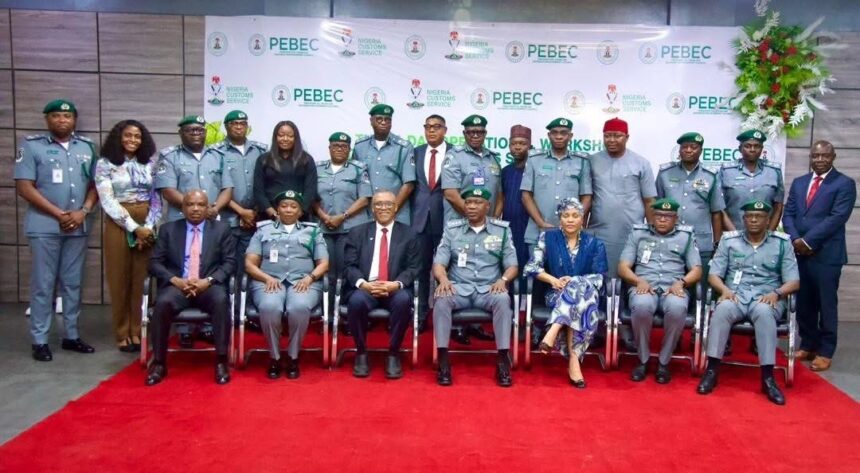
The Nigeria Customs Service (NCS), in partnership with the Presidential Enabling Business Environment Council, has launched a reform agenda to improve port operations and trade competitiveness.
Officials unveiled the initiative at a three-day operational workshop in Apapa, Lagos, on April 7, 2026.
The Comptroller-General of Customs, Adewale Adeniyi, presented a five-pillar strategy to drive implementation.
The strategy focuses on joint inspections, risk-based clearance, improved scanning systems, strict timelines, and stronger inter-agency coordination.
Read Also: Customs Launches AfCFTA Training to Boost Trade Readiness
He stressed that the Service must now focus on execution rather than policy design.
Adeniyi said the Service will prioritise intelligence-led cargo processing to improve efficiency and transparency.
He added that digital platforms and scanning systems must deliver faster clearance for traders.
The Customs boss said the workshop will produce a reform execution matrix to track progress.
He confirmed that the Service will actively monitor implementation and enforce accountability.
He urged officers to uphold professionalism, integrity, and consistency in their duties.
The Director-General of PEBEC, Zahrah Mustapha-Audu, called for risk-based and data-driven inspections.
She said agencies must shift from inspecting everything to inspecting the right consignments.
She noted that efficient border processes will reduce costs and improve Nigeria’s trade position.
Deputy Comptroller-General for Tariff and Trade, Caroline Niagwan, said Customs now plays a central role in economic growth.
She added that all commands must reflect improved operational efficiency.
The delegation also visited the National Single Window facility to review ongoing reforms.
They met with Zacch Adedeji and other stakeholders to address operational gaps.