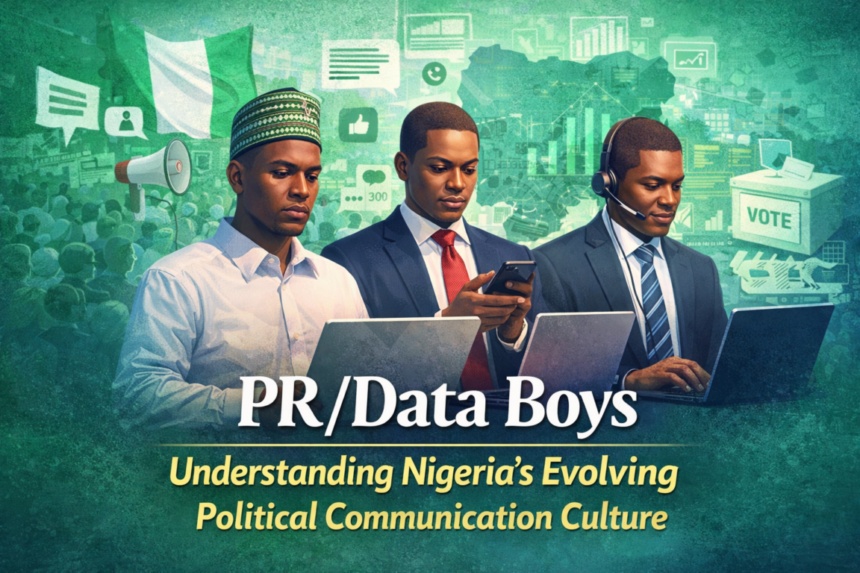
The term “data boys” has become common in Nigeria’s political space, although the name sounds new, the role itself is not.
However, the way political messages spread has changed as digital platforms now shape how people create, share, and consume information.
The Origins: Professional Image Makers
Before social media, trained professionals handled political communication.
Public relations experts, journalists, and media strategists worked through newspapers, TV, and radio, relied on research, credibility, and structured messaging.
They wrote opinion pieces, joined interviews, and built influence through expertise and professionalism.
The Social Media Shift
Then, social media changed everything.
Platforms like Facebook and X shifted power from experts to content creators.
Now, attention drives influence, as a result, people who understand trends and viral content often reach wider audiences than traditional professionals.
Why Politicians Adapted
Because of this shift, politicians adjusted their strategies.
Instead of relying only on consultants, many now use digital influencers. These individuals can spread messages faster and to more people.
This change led to the rise of what many call “data boys.”
What Do “Data Boys” Do?
“Data boys” often work outside formal structures. Most do not follow traditional PR methods.
Typically, they:
- Defend political figures online
- Attack critics or opposing views
- Amplify messages across social media
They focus on speed, repetition, and reach. Therefore, they often prioritize visibility over deep analysis.
Public Perception and Criticism
However, the term “data boy” often carries a negative meaning.
Critics link it to:
- Misinformation and disinformation
- Online harassment
- Blind political loyalty
In addition, many question accountability since these actors operate outside formal systems.
Is It a Legitimate Role?
Despite criticism, some see it as a real and growing form of work.
Nigeria’s tough economy pushes many young people toward digital opportunities. As a result, political content creation has become a source of income.
Although less structured than traditional PR, it reflects the current media reality.
The Bigger Debate: Substance vs Virality
Ultimately, the rise of “data boys” shows a deeper issue.
Traditional media values accuracy and depth. In contrast, social media rewards speed and emotion.
Therefore, Nigeria faces a key challenge how to balance reach with credibility.
The debate goes beyond individuals. It points to the future of political communication in a digital world.
Going forward, stakeholders must find ways to use digital power without losing trust and truth.