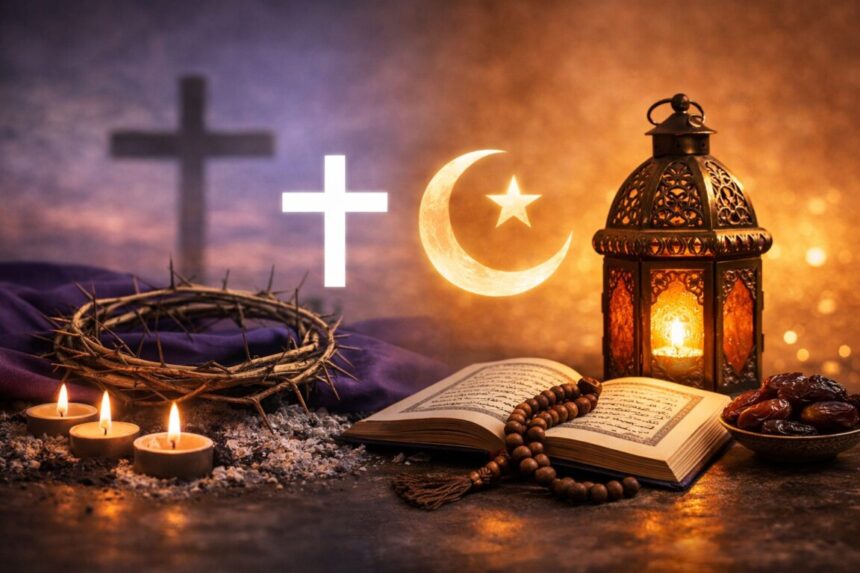
This year, Muslims began Ramadan on the same day many Christians entered Lent. For many people, especially in countries like Nigeria where both faiths are widely practiced, the overlap feels significant. But is it unusual? And what exactly does each season involve?
The alignment is largely a matter of how religious calendars work.
Ramadan is observed according to the Islamic lunar calendar, which is based entirely on the phases of the moon. Because the lunar year is about 10 to 11 days shorter than the Gregorian solar year, Ramadan shifts earlier each year. Over time, it moves through different seasons.
Lent, however, is linked to Easter, which is calculated using a combination of the solar calendar and the timing of the full moon after the spring equinox. Although Christianity follows the Gregorian calendar for most dates, the timing of Easter and therefore Lent still depends on a lunar calculation.
Since both observances are influenced by the moon in different ways, their dates occasionally coincide. It does not happen every year, but it is not extraordinary either.
Ramadan is the ninth month of the Islamic calendar and is regarded as the holiest period in Islam. During this month, Muslims fast daily from dawn until sunset. They abstain from food, drink, and other physical needs during daylight hours. However, Ramadan is not only about fasting. It is a time for increased prayer, recitation of the Qur’an, acts of charity, self-discipline, and spiritual reflection. The month ends with Eid al-Fitr, a celebration marking the completion of the fast.
Lent is a 40-day period observed by many Christian denominations leading up to Easter. It begins on Ash Wednesday and focuses on repentance, prayer, sacrifice, and preparation for the celebration of Christ’s resurrection. During Lent, many Christians fast or give up certain habits or luxuries as a form of spiritual discipline. The period encourages believers to reflect deeply on faith, humility, and service to others.
Although Ramadan and Lent differ in theology and practice, they share common themes. Both emphasize fasting, self-control, generosity, prayer, and spiritual renewal. Both call on believers to step back from routine comforts and focus on their relationship with God.
When they begin on the same day, it highlights a shared period of devotion across faith lines. In communities where Muslims and Christians live side by side, the overlap can foster mutual understanding and respect, as families, colleagues, and neighbors observe parallel seasons of discipline and reflection.
Ultimately, the simultaneous start of Ramadan and Lent is a calendar coincidence shaped by lunar cycles. But it also presents a unique moment, one where millions of people, through different traditions, commit to reflection, sacrifice, and spiritual growth at the same time.