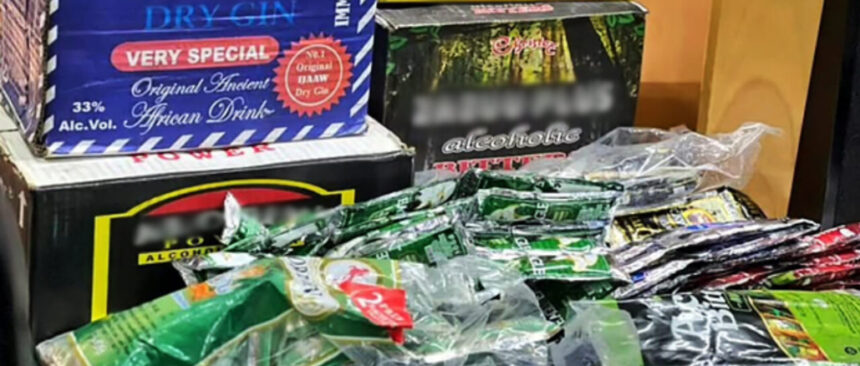
The National Agency for Food and Drug Administration and Control (NAFDAC) has denied reports that the Federal Government has suspended enforcement of the sachet alcohol ban in Nigeria.
In a statement issued by its Director-General, Prof. Mojisola Adeyeye, the agency described the claims as false and misleading. NAFDAC said it has not received any official directive from the Federal Government ordering a halt to the ban on alcoholic drinks packaged in sachets or in PET bottles smaller than 200 millilitres.
The regulator stressed that enforcement of the ban is still ongoing in line with existing public health regulations. It urged the public, manufacturers and distributors to rely only on verified information from official government channels.
The controversy began after some media reports suggested that the Federal Government had directed NAFDAC to suspend enforcement activities, including the sealing of factories and warehouses producing sachet alcohol. The reported directive was said to be linked to economic and security concerns, with calls for broader consultations under Nigeria’s National Alcohol Policy framework.
However, NAFDAC has maintained that no such communication has been formally conveyed to the agency. According to the regulator, actions already taken to remove sachet alcohol and sub-200ml alcoholic products from circulation remain valid and in effect.
The sachet alcohol ban is part of Nigeria’s broader effort to reduce harmful alcohol consumption, particularly among young people and low-income communities where small, affordable packs are easily accessible. Public health advocates argue that the move will help curb alcohol abuse and limit underage access.
On the other hand, manufacturers and traders have raised concerns about possible job losses, economic disruption and the impact on small businesses that rely heavily on the sale of sachet alcoholic drinks.
Despite the mixed reactions, NAFDAC’s latest clarification makes its position clear: the sachet alcohol ban stands, and enforcement continues unless officially directed otherwise by the Federal Government.
The development adds another layer to the ongoing debate over alcohol regulation, public health protection and economic stability in Nigeria.